
Knowledge
Pelvic floor training after childbirth and after prostate surgery
Two life situations, one common theme: after childbirth and after prostate surgery, the pelvic floor is particularly challenged. A lot can be achieved with the right training.
SmartMann editorial team · 13 October 2026 · approx. 6 min read
After childbirth: pelvic floor recovery
During pregnancy and childbirth the pelvic floor is heavily stretched and strained. Afterwards, many women notice that they leak urine when coughing, sneezing or exercising. In the first weeks after birth the tissue regenerates, and targeted postnatal exercises support this process.
When and how intensively training can begin depends on the course of the birth and should be agreed with a midwife or gynaecologist. If symptoms persist beyond the postnatal recovery period, a medical assessment is advisable.
After prostate surgery
After surgical removal of the prostate, temporary stress incontinence is common because the bladder’s closure mechanisms have to readjust. Targeted pelvic floor training is an important part of aftercare and is often recommended even before the operation.
Many men have never consciously worked with their pelvic floor before. This is exactly where feedback on the actual muscle work, for example through biofeedback, can help in learning the right technique.
Tips for successful training
- Practise regularly: short daily sessions are better than occasional long ones.
- Correct technique: draw the pelvic floor inwards and upwards without clenching the buttocks, abdomen or thighs, and keep breathing calmly.
- Don’t forget to relax: after each contraction the pelvic floor should be consciously released again.
- Build it into everyday life: briefly contract the pelvic floor before coughing, sneezing or lifting.
- Be patient: noticeable progress often only appears after several weeks.
Professional guidance pays off
A physiotherapist specialising in the pelvic floor can teach the right technique and adapt the training to your situation.
Sources & further reading
- NHS: Episiotomy and perineal tears ↗
- POGP – Pelvic, Obstetric and Gynaecological Physiotherapy: Pelvic floor muscle exercises for women ↗
- Cochrane Review (2023): Conservative interventions for managing urinary incontinence after prostate surgery ↗
The linked sources describe general medical background and are not product-specific evidence of effectiveness.
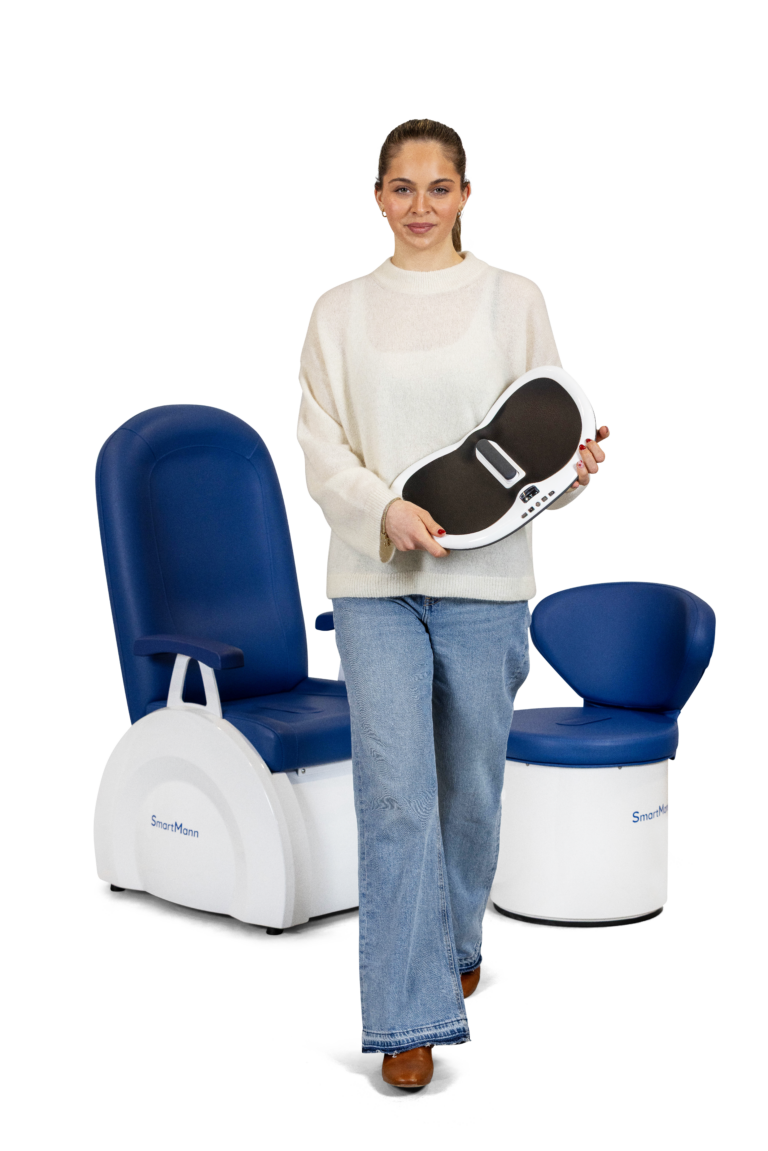
Training at home with the HnJ-350K
The biofeedback system for home use is controlled via the “DresKegel” app and shows your muscle work directly.
This article is for general information only and does not replace medical advice, diagnosis or treatment. If you have symptoms, please consult your doctor.