
Knowledge
Faecal incontinence and LARS after bowel surgery
Problems holding back stool or wind are among the most taboo complaints. Yet they are common, especially after surgery on the rectum. An overview.
SmartMann editorial team · 13 October 2026 · approx. 6 min read
What is faecal incontinence?
Faecal incontinence means that wind or stool cannot be held back reliably. The spectrum ranges from occasional loss of wind to involuntary passage of solid stool. Among other forms, a distinction is made between urge incontinence, where the urge comes so suddenly that the toilet cannot be reached in time, and passive incontinence, where stool is lost unnoticed.
Possible causes
- injuries to the sphincter muscle, for example during childbirth
- surgery on the rectum or anal region
- weakness of the pelvic floor and sphincter muscles
- nerve damage, for example due to neurological conditions or diabetes
- changes in stool consistency, for example with chronic diarrhoea
What is LARS?
LARS stands for “Low Anterior Resection Syndrome”. It describes symptoms that can occur after a low anterior resection of the rectum, i.e. an operation in which part of the rectum is removed, often as part of the treatment of rectal cancer. The symptoms often appear after closure of a temporary stoma.
Typical symptoms are frequent and urgent bowel movements, emptying in several portions, involuntary loss of wind or stool and a feeling of incomplete emptying. Severity varies widely and can change over time.
What treatment options are there?
Treatment depends on the cause and severity and is decided individually. Possible components are:
- dietary adjustments and regulating stool consistency
- medication, for example to slow down bowel activity
- pelvic floor and sphincter training, often supported by biofeedback
- electrical stimulation, depending on the findings
- transanal irrigation
- in selected cases, procedures such as sacral neuromodulation or surgery
Talk to your treatment team
For symptoms after bowel surgery, your surgeon, a proctology department or a continence centre are the right points of contact. Many measures can be combined well.
Sources & further reading
- NIDDK (National Institutes of Health): Treatment of Fecal Incontinence ↗
- Cochrane Review (Norton & Cody, 2012): Biofeedback and/or sphincter exercises for the treatment of faecal incontinence in adults ↗
- European Society of Coloproctology (ESCP): International consensus definition of low anterior resection syndrome ↗
- NHS: Bowel incontinence ↗
The linked sources describe general medical background and are not product-specific evidence of effectiveness.
Pelvic floor training for faecal incontinence
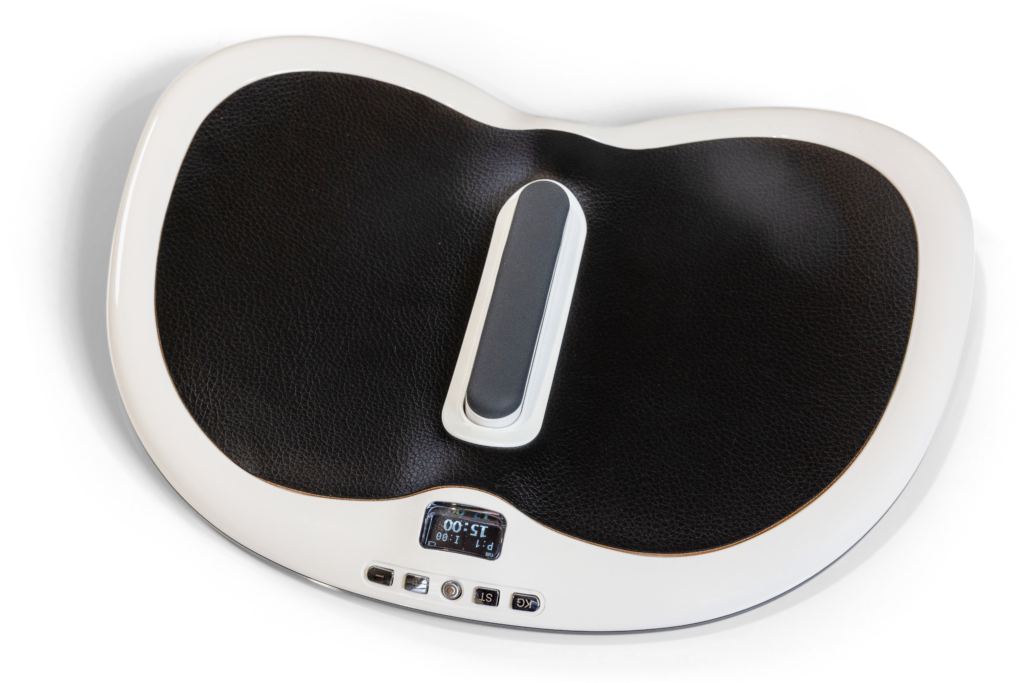
SmartMann systems support active training of the pelvic floor and sphincter muscles with biofeedback.
This article is for general information only and does not replace medical advice, diagnosis or treatment. If you have symptoms, please consult your doctor.