
Knowledge
Urinary incontinence in women and men: types, causes, treatment
Involuntary loss of urine is widespread and affects women and men of all ages. The good news: there are many treatment options. The first step is to talk about it.
SmartMann editorial team · 13 October 2026 · approx. 6 min read
What types of urinary incontinence are there?
- Stress incontinence: loss of urine during physical exertion, for example when coughing, sneezing, laughing, lifting or exercising. A weakened pelvic floor often plays a role.
- Urge incontinence (overactive bladder): a sudden, very strong urge to urinate, often without reaching the toilet in time. Frequently combined with frequent urination, including at night.
- Mixed incontinence: a combination of stress and urge incontinence.
- Overflow incontinence: the bladder does not empty completely and urine is lost in drops.
Causes in women
In women, pregnancy and childbirth, hormonal changes during menopause, excess weight or pelvic organ prolapse are often the main factors. Chronic coughing or heavy lifting can also strain the pelvic floor.
Causes in men
In men, urinary incontinence often occurs in connection with the prostate, for example after prostate surgery. An enlarged prostate can also lead to symptoms such as a frequent urge to urinate or post-micturition dribbling.
How is urinary incontinence assessed?
It starts with a detailed consultation. Often this also includes:
- a voiding or bladder diary kept over several days,
- a urine test, for example to rule out an infection,
- a physical examination and ultrasound, for example to measure residual urine,
- if necessary, further tests such as bladder pressure measurement (urodynamics).
What treatment options are there?
Treatment depends on the type, cause and severity. Conservative treatment is often tried first. Possible components are:
- pelvic floor training, guided by physiotherapy and often supported by biofeedback,
- bladder training and adjusting drinking and toilet habits,
- electrical stimulation of the pelvic floor muscles, alone or combined with active training depending on the findings,
- lifestyle measures such as weight loss or treating chronic coughing and constipation,
- medication, especially for an overactive bladder,
- aids and, if conservative measures are not enough, surgical procedures.
You are not alone
Urinary incontinence is a common condition and not a taboo. Talk openly to your doctor. The sooner the cause is clarified, the more targeted the treatment can be.
Sources & further reading
- NICE: Guideline NG210: Pelvic floor dysfunction – prevention and non-surgical management ↗
- NIDDK (National Institutes of Health): Treatments for Bladder Control Problems ↗
- NHS: Urinary incontinence: non-surgical treatment ↗
- NHS: Bowel incontinence ↗
The linked sources describe general medical background and are not product-specific evidence of effectiveness.
Pelvic floor training in hospital, practice and at home
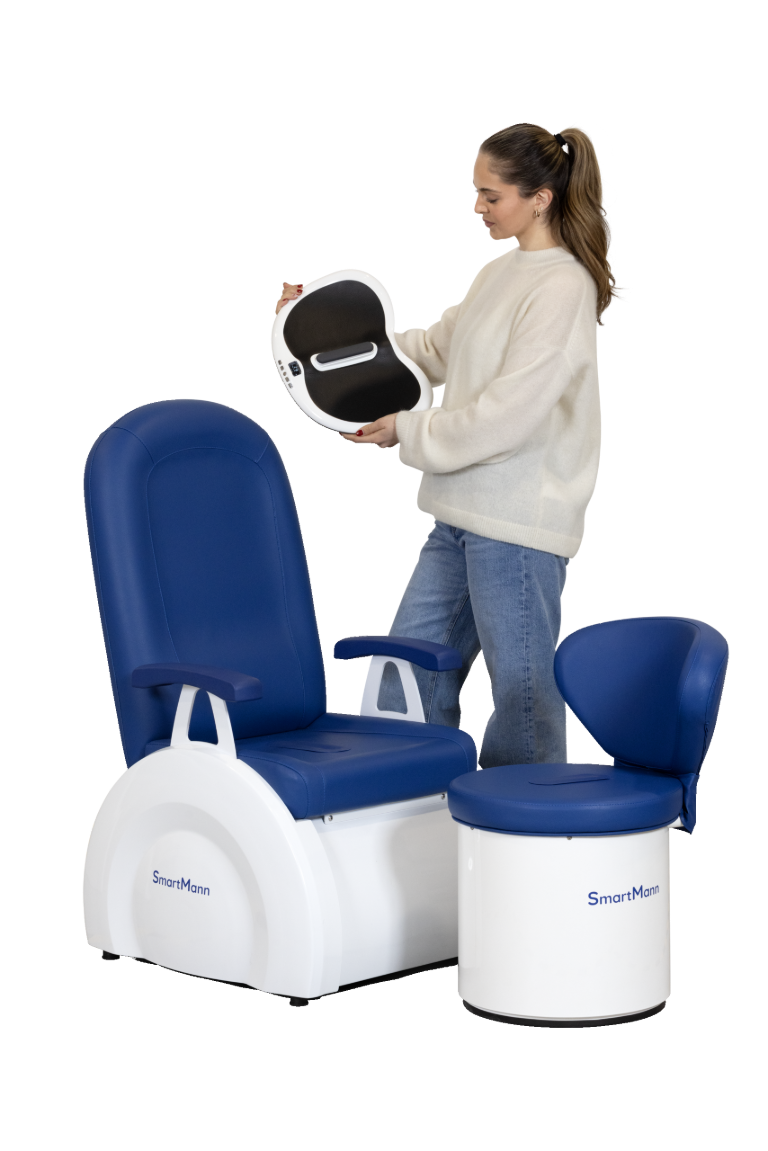
SmartMann systems support active pelvic floor training with biofeedback, fully clothed and without a probe.
This article is for general information only and does not replace medical advice, diagnosis or treatment. If you have symptoms, please consult your doctor.