
Pelvic Floor Therapy For Urinary Incontinence: Biofeedback vs. Kegel Exercises
Urinary incontinence affects millions of people in Germany—and is often preventable.
help with treatment: classic Kegel exercises and
modern Biofeedback therapy
What Is Biofeedback Therapy
Kegel exercises are targeted contractions of the pelvic floor muscles. They were
developed by Dr. Arnold Kegel and are intended to help improve bladder control.
The problem: Many patients perform them incorrectly—without realization.
What is Biofeedback therapy?
Biofeedback measures pelvic floor muscle activity in real time and displays it
on a screen. This allows the patient to see exactly whether they are engaging the right muscles.
This makes the therapy significantly more effective than Kegel exercises alone.
Indications for biofeedback therapy:
- Urinary Incontinence and Stress Urinary Incontinence (SUI)
- Overactive Bladder
- Frequent Urge to Urinate and Nocturia
- Fecal Incontinence
- Pelvic Floor Dysfunction
- Sexual Dysfunction
Who Is Biofeedback Suitable For
Biofeedback is suitable for urology, gynecology, gastroenterology,
Physical Therapy and Rehabilitation. It is also used successfully in the preparation for and follow-up care
after surgeries.
SmartMann Biofeedback products
SmartMann Medical GmbH, based in Hamburg, offers three devices for different
Applications:
- HnJ-350: For home use
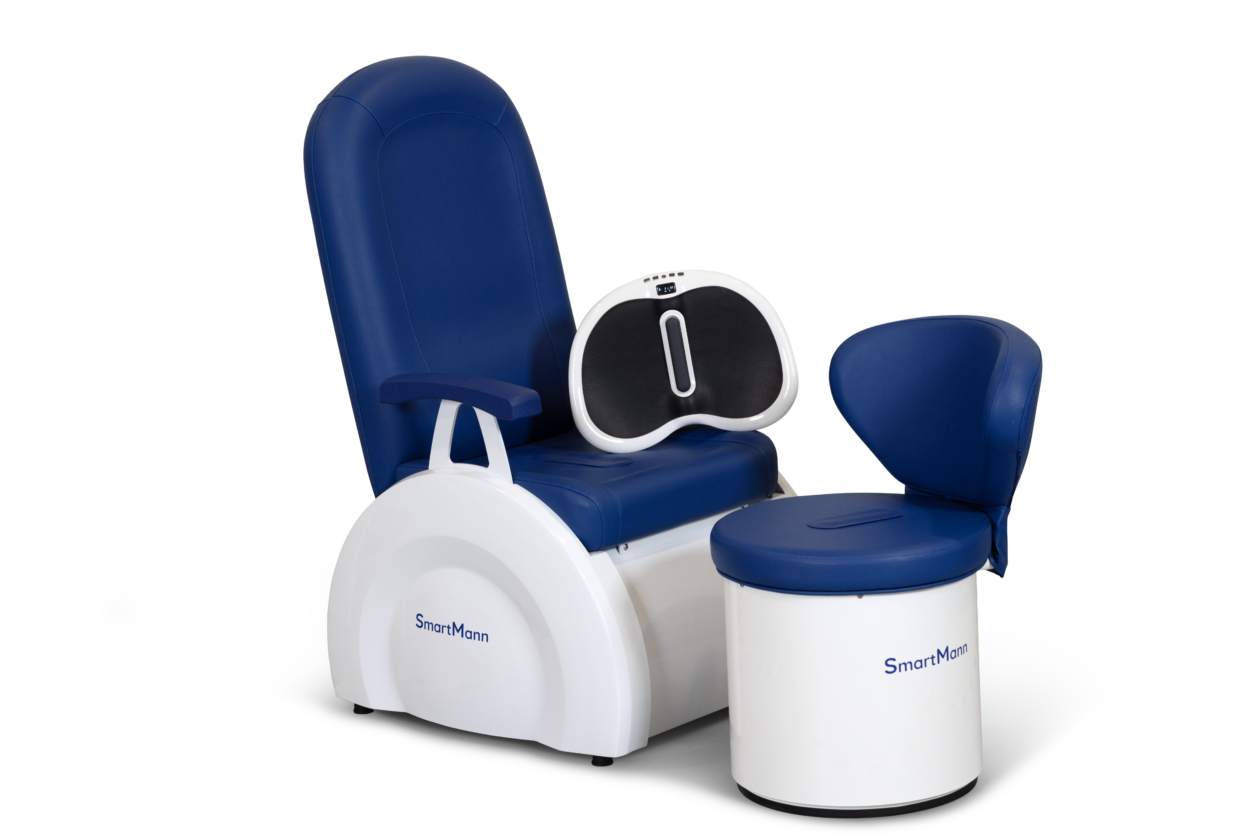
- HnJ-1000: Therapy Chair for clinics and medical practices
- HnJ-7000: For hospital use
All devices are made in Germany and designed for effective, non-invasive
pelvic floor therapy.